As part of the Building Physics Team and lead of the Computational Design community at Hoare Lea, I was tasked with improving the detailed exterior wind simulation (CFD) process required for new developments within the City of London. The work involved heavy data exchange between tools and relied on many manual steps.
I focused the optimisations on four areas: (a) architectural model preparation and cleaning algorithms in Grasshopper 3D for use in CFD, (b) modelling improvements in SpaceClaim, (c) partial automation of CFX post-processing in CFD-Post using Python, and (d) calculation and visualisation of pedestrian comfort metrics required by the City of London using Pandas and Plotly.
HOARE LEA
Hoare Lea is a UK-based, multidisciplinary engineering consultancy specialising in building services. The firm works with clients from detailed design through to delivery.
Within the Building Physics Team, I focus on detailed building analysis: CFD, annual daylighting, indoor and outdoor thermal simulations, solar irradiation, raytracing climate analysis, software development, data analysis, and research.
WIND GUIDELINES
The City of London’s Wind Microclimate Guidelines for Developments in the City of London were published in August 2019, outlining a methodology to assess new buildings using CFD and wind tunnel testing.
The guideline aims to maintain good wind microclimate conditions for outstanding public spaces in the City, reducing the adverse wind effects that compromise the quality and usability of outdoor areas, and the safety concerns that arise in extreme cases.
ACHIEVEMENTS
- Launched a new high-value service for the consultancy.
- Built a complete and robust workflow to assess outdoor comfort per the City of London Guidelines.
- Deployed the tool to the Building Physics Team for production use.
- Automated CFX results post-processing using performant Python libraries.
- Automated results visualisation and export using Python.
PROJECT DESCRIPTION
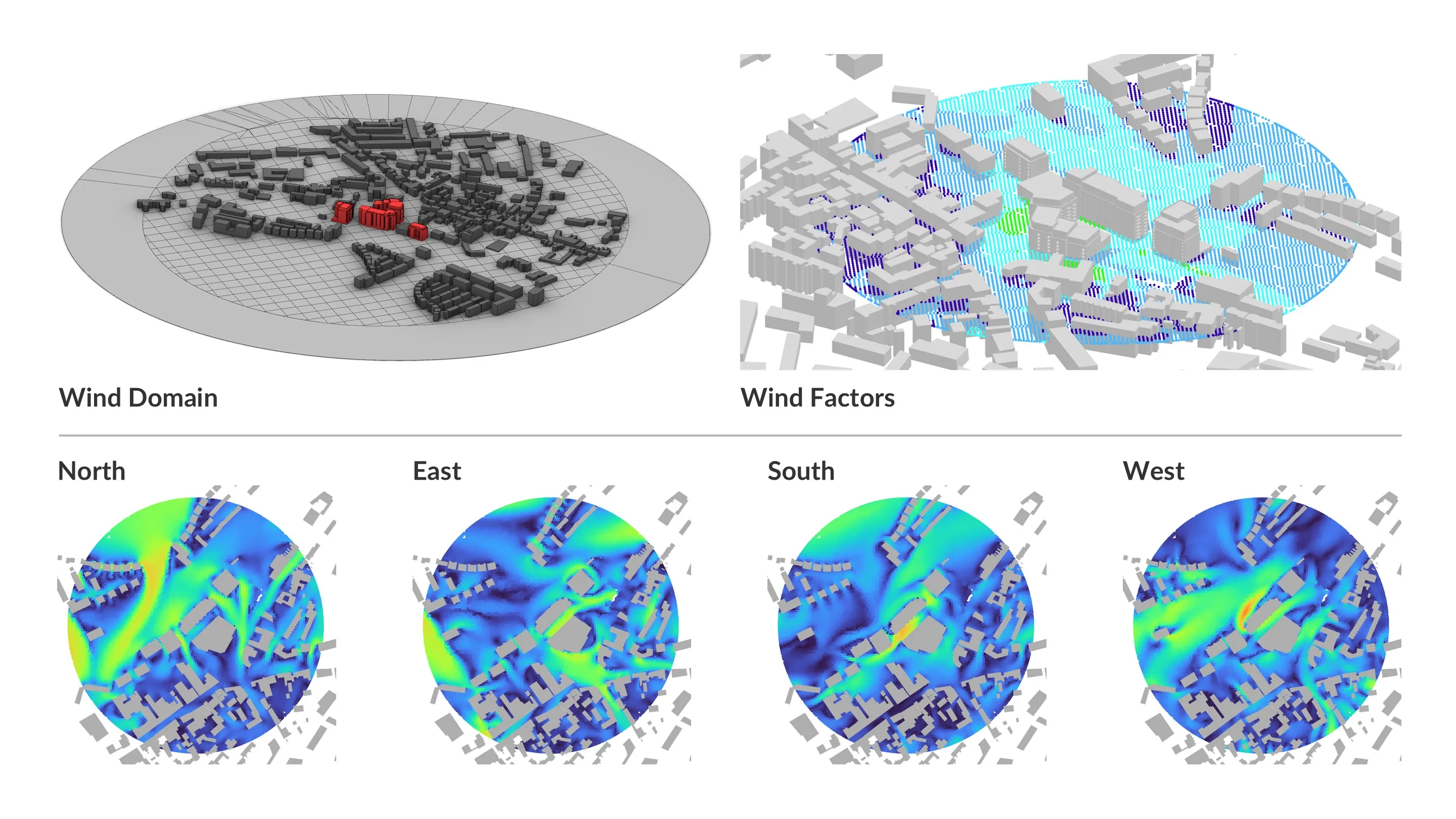
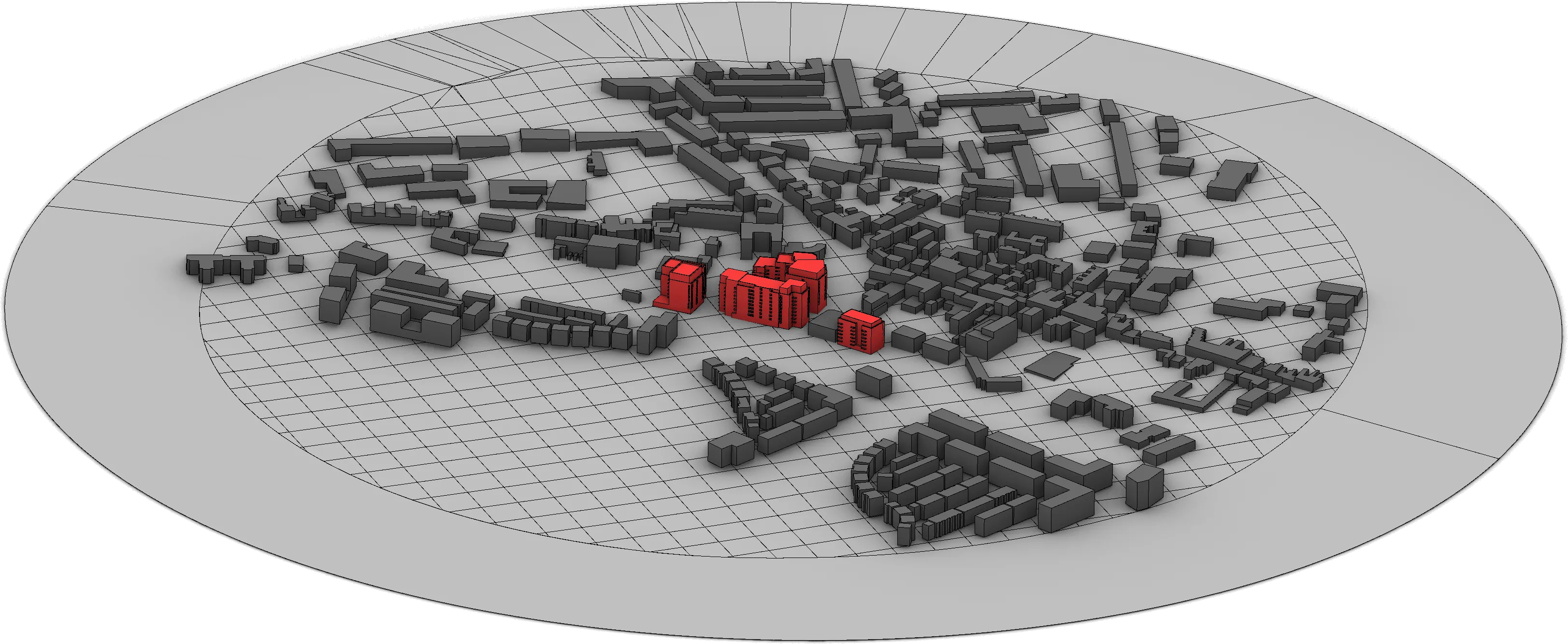
To comply with non-disclosure agreements, the workflow is shown on an unidentified location. Model preparation followed the City of London Guidelines, which require modelling surrounding buildings within 300m of the analysis building.
Two sets of simulations were run: (1) current state, and (2) proposed development. The latter is shown in the results.
The Weibull parameters attached in the Annex A: of the Wind Micro-climate Guidelines have been used for this assessment.
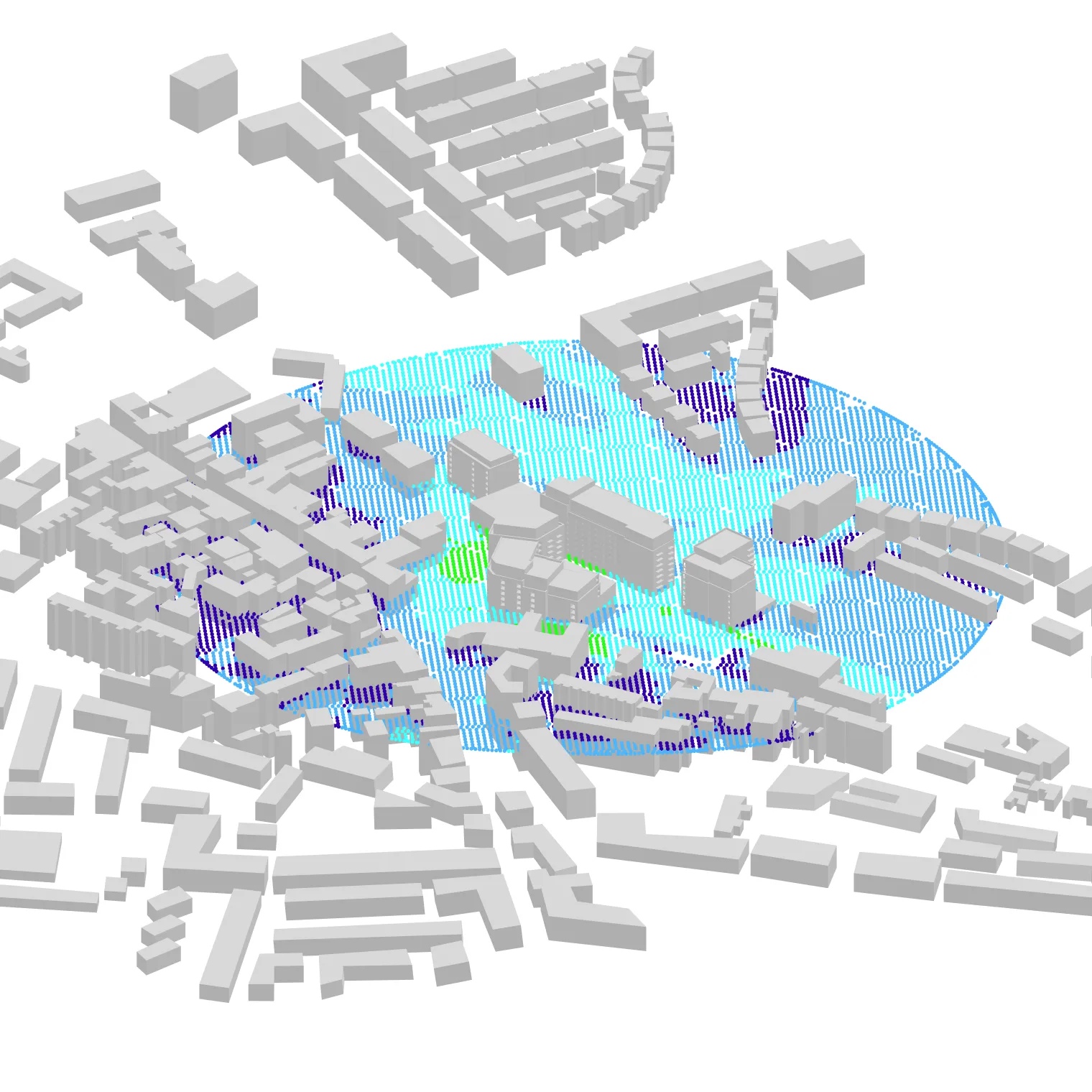
WIND ACCELERATION FACTORS
Wind acceleration factors are computed by dividing the wind velocity at comfort level (typically 1.5m from the ground) by the inlet wind velocity at 10m height.
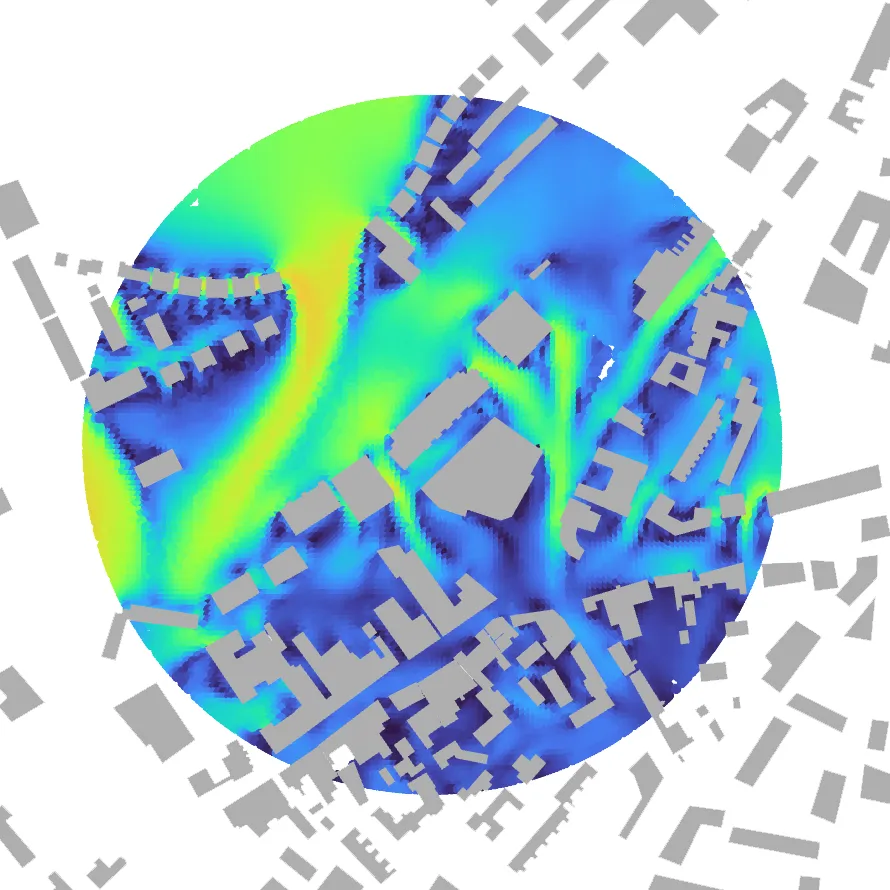
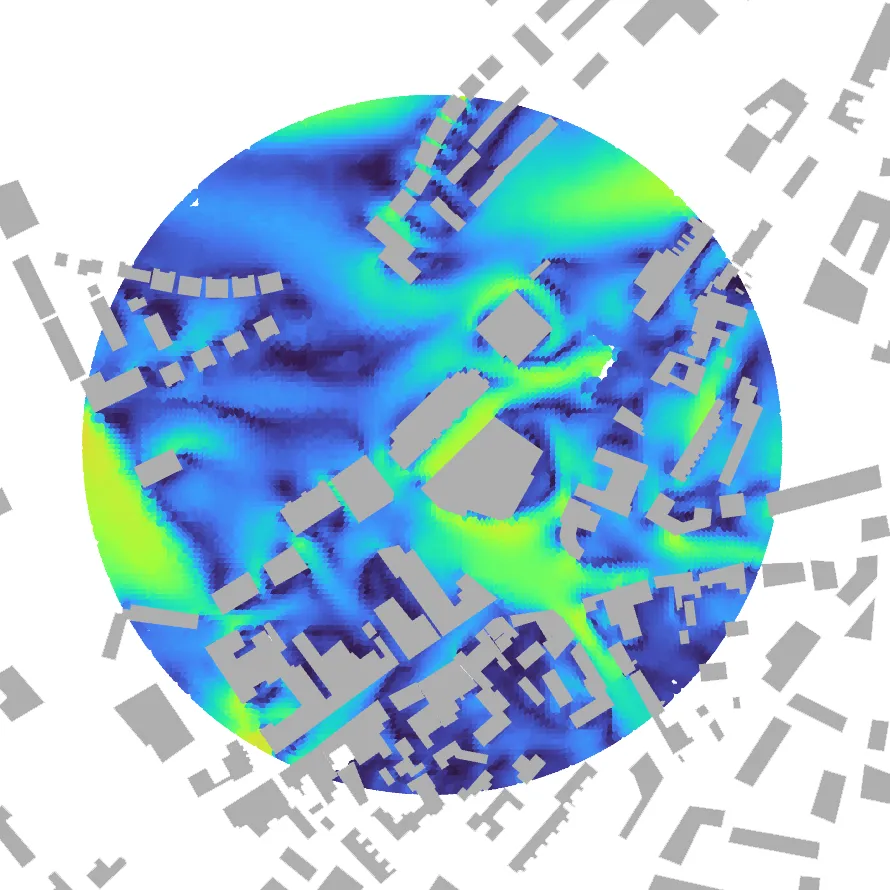
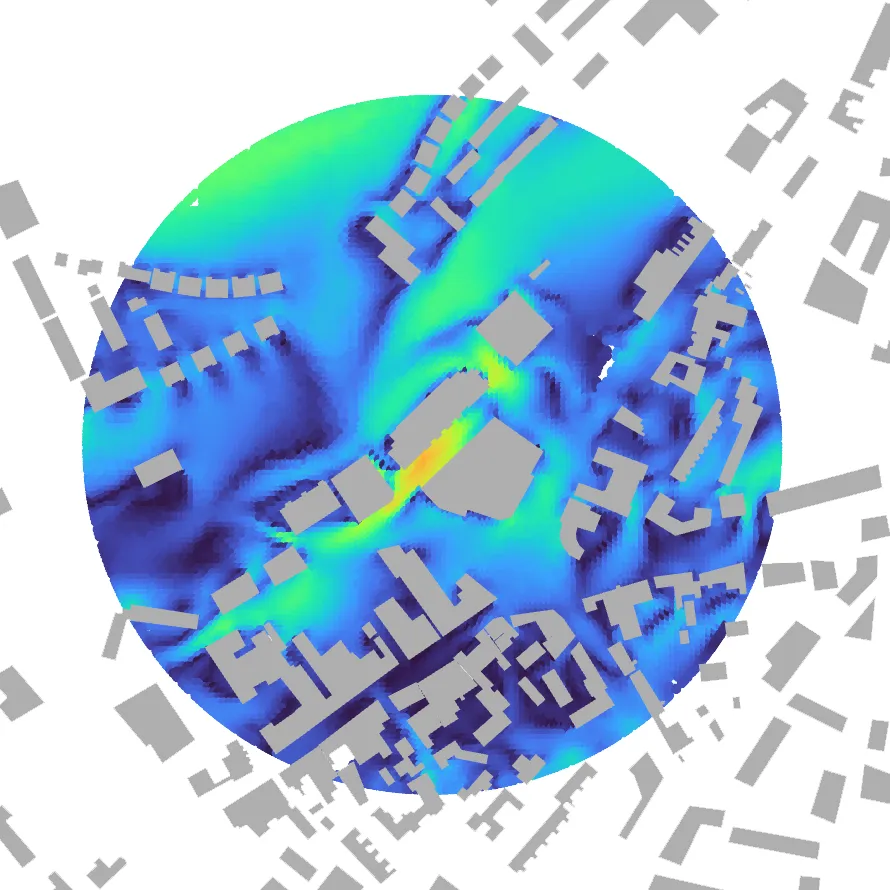
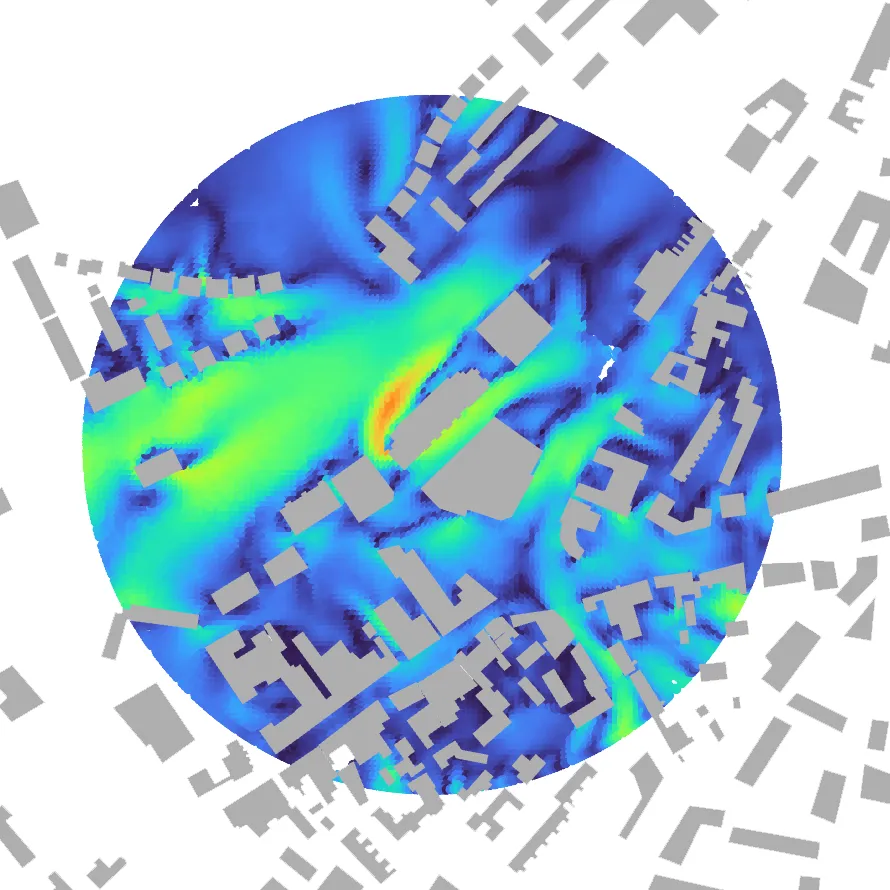

Disclaimer
The CFD simulations were run with support from senior engineers in the Hoare Lea Building Physics Team. All post-processing and visualisations were developed by the author.
WIND COMFORT CRITERIA
A modified version of the Lawson LDDC criteria (the City Lawson Criteria) is used in the City of London. The Lawson criteria, first published in 1978, are a set of comfort categories that quantify the worst wind conditions most passersby will consider acceptable. Pedestrian comfort depends strongly on activity, so the criteria are defined per activity as a threshold wind speed that should not be exceeded for a given fraction of the year.
| Category | Threshold | % Exceed | |
|---|---|---|---|
| ● | Frequent Sitting | 0.0 – 2.5 m/s | 5% |
| ● | Occasional Sitting | 2.5 – 4.0 m/s | 5% |
| ● | Standing | 4.0 – 6.0 m/s | 5% |
| ● | Walking | 6.0 – 8.0 m/s | 5% |
| ● | Uncomfortable | > 8.0 m/s | 5% |
| ● | Dangerous | > 15 m/s | 0.022% |